
King Billy
50 Free SpinsPromo codeBUFF50 Get Spins 2
Magic365
60 Free Spins Get Spins 3
7Bit
75 Free SpinsPromo code75BIT Get Spins 4
Slotsgem
50 Free Spins Get Spins 5
Ivibet
50 Free Spins Get Spins 6
Hellspin
50 Free Spins Get Spins 7
Katsubet
50 Free SpinsPromo codeCASH Get Spins 8
Mirax
60 Free SpinsPromo codeMX60 Get Spins 9
HitNSpin
55 Free Spins Get Spins 10
GGBet
50 Free SpinsPromo codeJOKERFS45 Get Spins 11
Slotoro
50 Free Spins Get Spins 12
V.Vegas
50 Free Spins Get Spins 13
VerdeCasino
50 Free Spins Get Spins 14
IceCasino
50 Free Spins Get SpinsAn offer advertised as a no deposit bonus is not one thing but a short list of separate published values. The round count is one value.
The amount behind each round is another, and a no deposit bonus also publishes a condition, a limit on what may be withdrawn, and in many cases a string to enter at the claim. Readers in Canada tend to meet all of them at once, in a single block of small type, which is precisely what makes an offer awkward to assess. Taken one at a time each value is plain enough.
The count says how many rounds arrive. The unit value says what one round stakes. The condition says how much play the terms want afterwards. The ceiling says how far a request can reach. Difficulty arrives when they are read as a single impression rather than as five independent entries, because no two of them measure the same quantity and none of them implies another.
What a no deposit bonus is at a Canadian online casino
A no deposit bonus is promotional value that reaches an account with no payment behind it. The operator credits a run of free rounds on a game it nominates, or a sum of promotional credit, and the crediting is not waiting on a card, a transfer or a wallet. An empty account can hold one. That is the whole of what the category name guarantees, and it is the only feature every offer in the category shares.
Everything else is drafted individually. A document sets the base the condition is calculated against. It names the game the rounds are tied to. It fixes a ceiling over what a request may carry, or records nothing under that heading. It may publish a string, or publish none. Two offers with the same figure on the promotional page can therefore run on documents that overlap very little, and the figure on the page gives no warning of it. What the category settles is the entry route. What follows the entry is settled elsewhere, clause by clause, in wording the operator wrote for that promotion alone.
There is one practical consequence of that drafting, and it is worth stating plainly. On an account claimed this way the promotional balance is the only value there is, so every condition riding on it governs the whole position and not a portion. No balance belonging to the player sits alongside it to absorb a condition that proves heavier than expected.
Every value the offer will act on is published before the claim, and every value it will not act on is missing from the same document. The terms can therefore be verified in advance, which the experience of playing cannot, and verifying them costs nothing but the minutes spent finding the full document instead of the summary beside the offer.
How many free spins and what each one is worth
Two figures govern a run of promotional rounds, and they are published separately. Seven of the ten offers compared further down award 50 rounds and three award 100. That count is the field every operator records, and it is recorded in the same unit everywhere, which is why it tends to carry the headline figure on a promotional page. What it establishes is narrow. It says how often the nominated game may be played on the casino’s money and settles nothing else. A larger count does not make an offer stronger anywhere here, and the three offers at a hundred rounds sit above none of the seven at fifty.
The second figure is the amount the casino places behind one round. Eight of the ten publish it and two record none, so for two of the offers the stake behind a single play sits outside the document. Nothing in a round count implies a unit value and nothing in a unit value implies a count: an offer of 100 rounds says nothing about what one of them stakes, and an offer at CAD 0.30 a round says nothing about how many arrive. The two sit in separate clauses and neither can be recovered from the other. Across the eight documents publishing a unit value, the figures recorded are CAD 0.15, CAD 0.30 and CAD 0.38, each belonging to one play rather than to a balance.
Where both are published, multiplying one by the other gives a gross stake value, the nominal total the casino commits across the run. It measures commitment and not outcome. A total of that kind puts the scale of a promotion into one number and says nothing about the return. It is an amount staked on the player’s behalf: not winnings, not money received, not a return and not an expected value. Nor is it read against a withdrawal ceiling, since the two figures were never measured in the same way. The figures below are invented so that no brand’s data passes through the calculation:
| Item | Amount |
|---|---|
| 80 rounds at CAD 0.22 | CAD 17.60 |
Types of no deposit bonus offers
The category holds several shapes of promotion, and the shape of one decides which of the values a reader meets first. Common to the shapes is that no payment precedes the award. What divides them is what the award consists of, and the manner in which a document fastens it to an account. Four shapes appear across the material behind this page, and a reader meets each of them as a published category rather than as a grade of anything.
- Free rounds nominated to a single game, the run remaining on that title throughout the time the rounds hold promotional status and never carried elsewhere in the catalogue.
- Free rounds carrying a documented list of eligible titles, the choice running across whichever names the terms publish and no further.
- A promotional sum credited in place of free rounds, treated as a balance in its own right and kept clear of whatever cash the account may acquire later.
- An offer opened by keying in a published string, that string being what registers an account against one particular promotion.
Three other kinds of promotion are easily mistaken for these, and the difference lies in what a player has to do first. A deposit-matched promotion draws its size from funds already moved across, and until a payment settles it does not exist. A cashback-style promotion gives back a proportion of losses incurred inside a stated period, so play and money both come before the award. A loyalty-style promotion accrues from activity spread over time, which means a record has to exist before anything is credited. None of the three can be reached on an account never funded, and all three can carry conditions that look familiar once the award exists.
What a no deposit bonus promo code does
A promo code is a string published beside an offer. Entering it records the account as claiming that one promotion, and recording it is the whole of the string’s function. The figure applied to the base is unaffected by it. So is the nominated game, so is the ceiling over a payout, and so is the eligibility wording, every one of them drafted separately and binding alike on each account holding the offer.
Where a string exists, the document generally names two things about it: the place it goes, and the point at which it goes there. Some terms call for it during registration. Others call for it inside the promotional pages of an account already open. Six of the ten offers set out below publish a string — FSBONUS100 at two of the brands, FSBONUS50, JOKERFS45, SPM50 and UPLAY100 — and where such a string exists but is not entered, the promotion may never attach itself to the account at all.
Four of the ten record no string in the corpus. That statement concerns the record and extends no distance beyond it. It does not establish that a string is unnecessary, that there is no entry step, or that the award arrives by itself at registration, and no route into any of those four offers is supplied here. Two of the six brands carrying a code publish one and the same string, a fact about two documents that establishes nothing past them.
Who can claim these offers in Canada
Eligibility is whatever the wording published with an individual offer says it is. A document may restrict a promotion to an account newly opened. It may hold claims to one for each person, and some documents stretch that limit across a household or one shared address. It may set out which territories a promotion admits and which it does not. Each of those is a published condition, locatable ahead of a claim, and binding in the cases where the terms do set it out. No one of them follows from the category, and no one of them can be assumed out of another operator’s document.
An unrecorded restriction supports no conclusion of any kind. The absence of a household clause is not permission for a second account at one address, and the absence of a provincial clause is not coverage of every province. Silence belongs to the record and not to the rule, and the answer is held in the operator’s document.
Age is the single condition settled outside an operator’s hands, and it is settled by each province rather than across the country. Beyond age, where a reader happens to be does not by itself settle what they may claim, because availability turns on the individual terms and on the framework the operator works inside. An account is worth opening on what the published wording admits, and not on what it has simply left unexcluded.
How to claim a no deposit bonus
Claiming runs through four stages, and each is settled by the document rather than by anything on the screen. The account comes first. Then the offer is activated, by a string where the terms publish one. Then the rounds are played on the game the terms nominate. Then whatever the rounds produced sits under a condition until that condition is met. None of the four repairs comfortably after the fact, which is why each is worth reading in advance.
Opening the account
Registration sets down the details any later check will be measured against, so entering them as they appear on the holder’s own documents avoids a correction that may itself draw a second look. Some offers require a newly opened account, and where the terms say so an existing one does not qualify. The eligibility wording is read here rather than later, because meeting it is what opens a claim at all and no later step makes up for a condition never met.
Activating the offer
Six of the ten offers below publish a string, and the terms generally say both where it belongs and when. Where the corpus records no string, nothing about the route into that offer follows from the silence, and the operator’s own wording is what settles it. Activation is also where a promotional balance either appears on the account or does not: an offer listed on a page and an offer credited to an account are separate things, and only the second has conditions running against it.
Playing the rounds through
The rounds belong to the nominated game for as long as they hold promotional status, and the terms do not allow them elsewhere in the catalogue. Which device the account is reached from makes no difference to any of this, since the conditions attach to the account rather than to a screen. Play that goes on after the run is finished answers to the contribution wording and not the assignment, and some terms cap what one bet may be while a condition is open, which bears on pace rather than total.
Keeping track of where the bonus stands
A record of play and promotional progress represents what the account has done against what the condition still asks for. In principle it keeps promotional value apart from cash, logs what was credited together with the date, and offers some reading of what turnover is left. Whether that third element is displayed at all rests with the operator, and where nothing is displayed the written document is the only account of what remains. Nothing is claimed here about where such material is kept or the name an operator gives it.
Online casino rules in Canada and Ontario
The minimum age for gambling in Canada is set by each province and territory, not from Ottawa, and the figures differ. In Alberta, Manitoba and Quebec it is eighteen. Across the remaining provinces and territories it is nineteen. No countrywide figure exists, and no provincial threshold can be read as standing for the rest. An operator or a product may apply something stricter above the local rule, and the stricter condition then binds whichever account it attaches to. A reader satisfies the local threshold first and the operator’s eligibility wording second, and neither substitutes for the other. An operator admitting an account has not waived the provincial figure, and a province permitting play has not settled the operator’s own terms.
On 4 April 2022 a regulated market opened in Ontario to private operators. Registration and regulation of those operators falls to the Alcohol and Gaming Commission of Ontario, and iGaming Ontario conducts and manages the framework the registered operators work inside, signing the agreement each of them holds. The province also governs how bonuses, inducements and gaming credits may be advertised and promoted in public. That position bears on the advertising and not on the promotion behind it, so bonuses are not unavailable inside the province; in practice it means a promotion can be put in front of a signed-in account holder while appearing on no openly published page. None of this describes the rest of the country.
Alberta opened a market of its own on 13 July 2026, with Alberta Gaming, Liquor and Cannabis and the Alberta iGaming Corporation occupying the equivalent positions there. Elsewhere, where the corpus records the arrangement, a province conducts and manages a platform itself instead of admitting brands from outside, which changes what a resident of that province can reach. Apart from any provincial arrangement entirely, the Kahnawake Gaming Commission dates from 1996, its online gaming framework from 1999, and it works out of the Mohawk Territory of Kahnawà:ke with its own licensing and permit regime. A permit from there is an instrument of a different kind from a provincial registration, and it substitutes for one in no respect.
On taxation the corpus holds a principle and no arithmetic. Casual play is treated as producing winnings that sit outside income, whereas play conducted as a business is dealt with on other terms, and which of those two fits a given situation is beyond anything a comparison page could resolve. Nothing set down here is tax or legal advice, and nothing here rules on the lawfulness of using any site from any province. The rules above are reported as the corpus records them. A reader’s own position is established in the operator’s documents and in the framework of the province they are in, and in no other place that a page of this kind could supply.
How these offers were compared
Six fields were recorded for each of the ten brands, and the comparison carries those six and nothing else: the casino, the number of free spins, the assigned game, the studio credited, the wagering condition and the withdrawal cap. A cell reads not documented wherever a brand’s document records nothing under one of the six. That single wording runs through the table, nothing left blank and nothing substituted, reporting no more than the absence of an entry in the corpus.
Row order comes from the documented promo code taken alphabetically as a run of characters, and the four brands with no recorded code finish the list, ranked by casino name. The sequence is an index and carries no judgment: a code string says nothing about quality, and a brand without a documented code sits behind one with a code for no reason beyond the ordering rule. No score, no weighting, no rating and no claim of expertise lies behind it. One wagering entry is set out in words instead of a figure and is kept off the numeric scale the others occupy, and the cap column carries figures in more than one unit, which are not read as a single measure.
10 no deposit bonus offers compared
Ten offers are set out below, each of them described from the fields its own document records. Fifty rounds are awarded by seven of them and a hundred by three. Eight name a single game and eight credit a studio for it, while the conditions run from a stated figure of 3x up to 50x, with one document setting its own condition out in words rather than as a number. Four publish a ceiling as a cash amount, three express it in another unit and three record nothing under that heading. Each figure appears as its own document records it, and a field holding nothing is reported that way rather than topped up from elsewhere in the set.
| Casino | Free spins | Game | Studio | Wagering | Withdrawal cap |
|---|---|---|---|---|---|
| Beef Casino | 100 | Book of Ra Deluxe | Novomatic | 45x | ten times the bonus |
| Gizbo | 100 | not documented | not documented | 45x | ten times the bonus |
| King Billy | 50 | Elvis Frog Trueways | BGaming | 50x | CAD 75 |
| GGbet | 50 | Sweet Bonanza | Pragmatic Play | 30x | CAD 15 |
| Spinmills | 50 | Le King | Hacksaw Gaming | 50x | not documented |
| WinBeatz | 100 | six titles to choose from | multiple studios documented | 45x | not documented |
| Hellspin | 50 | Lady Wolf Moon Megaways | Booming Games | condition stated in words | not documented |
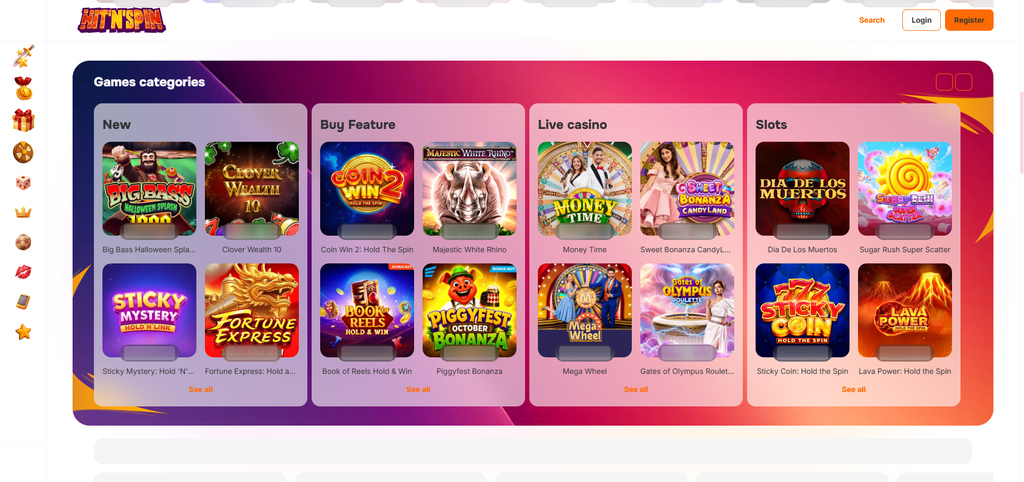
| HitNSpin | 50 | Big Bass Splash | Pragmatic Play | 3x | CAD 15 |
| IceCasino | 50 | Book of Fallen | Playson | 3x | CAD 38 |
| Slotoro | 50 | Gates of Olympus | Pragmatic Play | 5x | three times winnings |
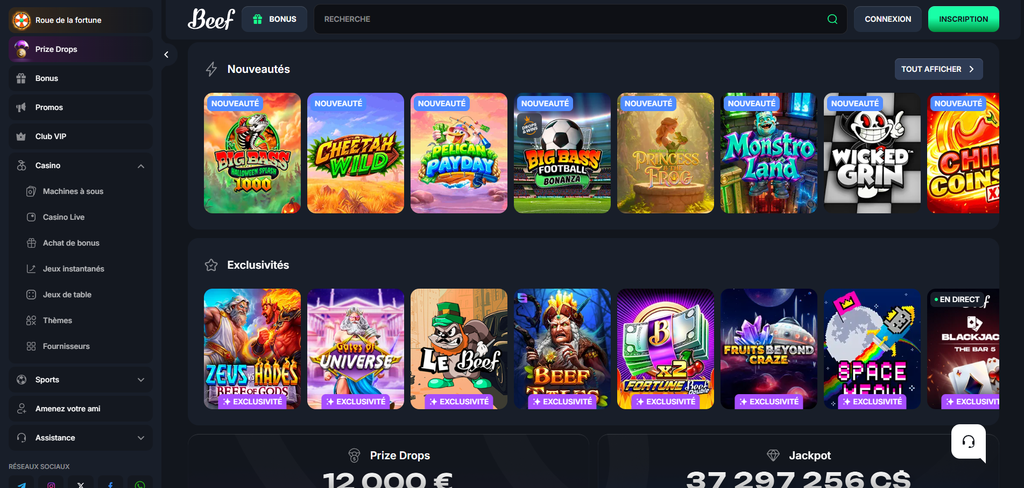
Beef Casino: CAD 0.15 free spins on Book of Ra Deluxe
CAD 0.15 is the value this document gives to one promotional round, which is the sum the casino places behind a single play and nothing more than that. One hundred rounds are awarded, Book of Ra Deluxe is the nominated game, Novomatic is credited with that title, and the stated condition is 45x. FSBONUS100 is the published string for the claim. The ceiling appears as ten times the bonus, a unit rather than a cash figure, and the document gives no validity window anywhere for the offer at any point.
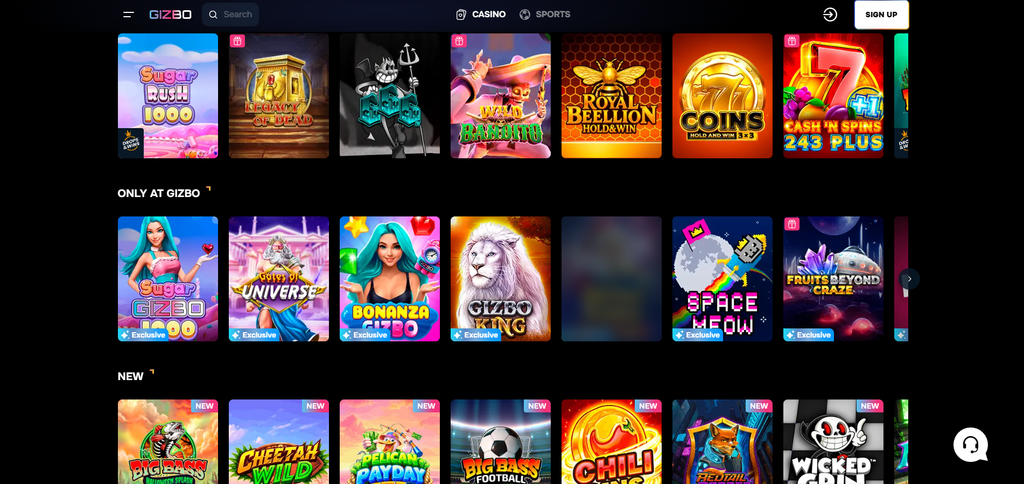
Gizbo: 100 free spins with x45 wagering
One hundred rounds arrive here and 45x is the figure the terms apply afterwards. A count measures how much promotional play is credited; a stated figure measures how much turnover is asked for once that play is over, and the document sets each down without deriving either from the other. Every one of the rounds is recorded at CAD 0.15, FSBONUS100 is the published string, and the ceiling is given as ten times the bonus. The game these rounds run on is undocumented, and so is the studio behind that game.
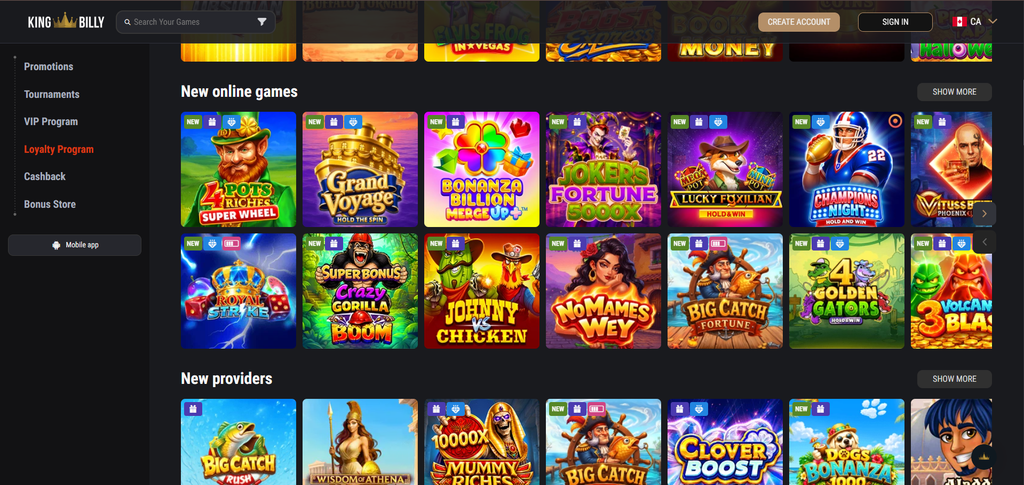
King Billy: promo code FSBONUS50 with a CAD 75 withdrawal cap
FSBONUS50 is the string this offer records and CAD 75 is its published ceiling on a request. Keying a string in registers the account against this promotion; the ceiling decides how much can ultimately leave, and neither of the fields acts on the other in any respect. Fifty rounds run on Elvis Frog Trueways, BGaming is credited with that game, each one of those rounds is recorded at CAD 0.15, and the stated condition for the offer is 50x. No maximum bet figure appears anywhere in the document covering this particular offer.
GGbet: CAD 0.30 free spins with a CAD 15 cap
CAD 0.30 sits behind each of the rounds here and CAD 15 is the published limit on a request. The first of those figures belongs to a single play and the second to the outer edge of the promotion, and neither was drafted with reference to the other. Fifty rounds are nominated to Sweet Bonanza, Pragmatic Play is credited with that game, the stated condition is 30x, and JOKERFS45 is the published string for a claim. The terms record no contribution rate for any category of casino game at all.
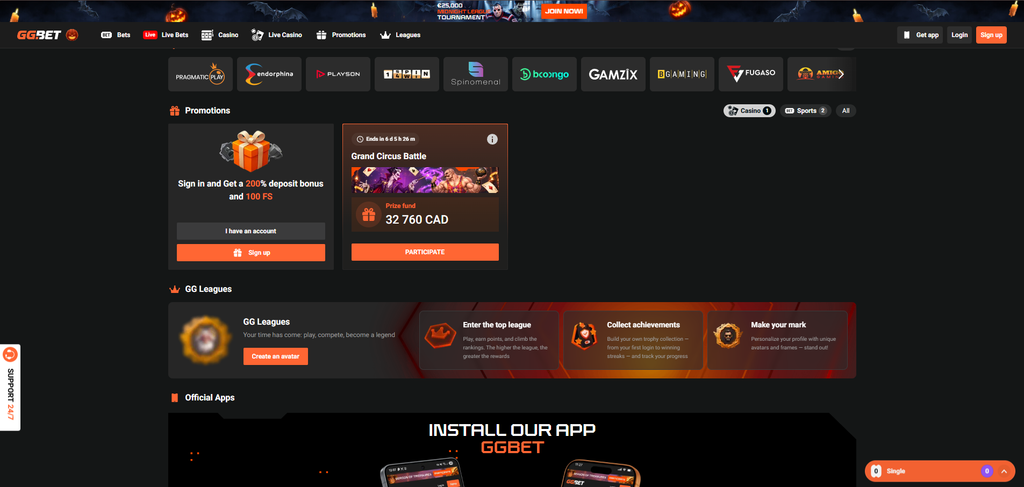
Spinmills: 50 free spins on Le King with promo code SPM50
Le King is the game these rounds are named for, and SPM50 is the string recorded as reaching them. The first of those fields places the play and the second registers the account against this particular promotion, with neither bearing on the other at any point. Fifty rounds are credited in all, Hacksaw Gaming is credited with the game itself, and the stated condition for the offer is 50x. The amount behind one round is not published at all, and no ceiling on a withdrawal appears anywhere in the document for this offer either.
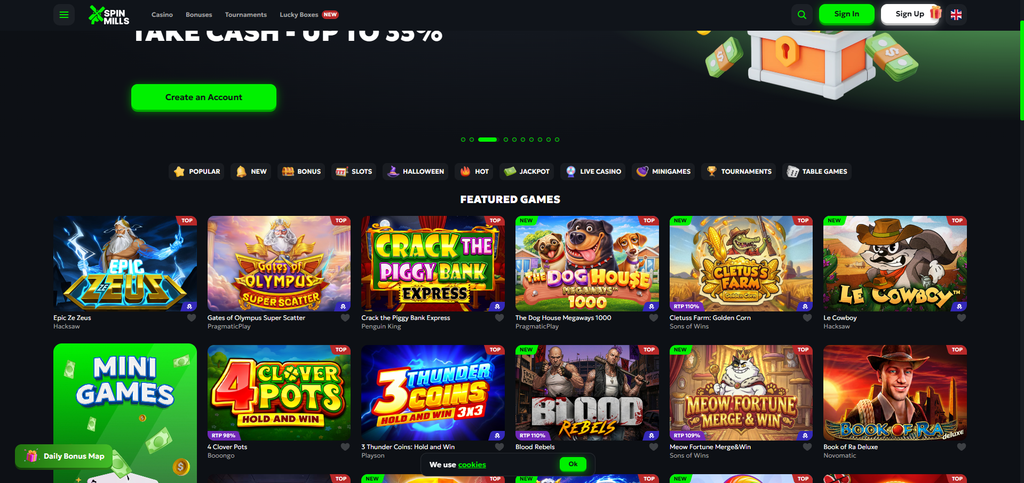
WinBeatz: promo code UPLAY100 with six eligible titles
UPLAY100 is the published string here and the terms name six titles the rounds may be used on. A string records the claim; a documented list of games settles where the play may happen, within the names the document gives and nowhere at all beyond them. One hundred rounds are awarded here, the offer is recorded as drawing on multiple studios rather than one, and the stated condition is 45x. Neither the amount placed behind one round nor any ceiling on a request is documented anywhere for this particular offer.
Hellspin: CAD 0.38 free spins with wagering stated in words
CAD 0.38 is recorded against each round, and the wagering condition for this offer appears in words rather than as a figure. A unit value is a number the document supplies; the condition is wording the operator wrote, reproduced here as it stands and neither converted into a number nor ranged beside the stated figures. Fifty of the rounds run on Lady Wolf Moon Megaways, with Booming Games credited for the game itself. Neither a ceiling on a request nor a string for the claim is recorded anywhere for this offer.
HitNSpin: 50 free spins on a Pragmatic Play slot
Fifty rounds are credited here and Pragmatic Play is the studio credited for the game they run on. A count says how much promotional play arrives; a studio credit names the developer of the title and settles nothing whatever else about the offer. Big Bass Splash is the nominated game, each of the rounds is recorded at CAD 0.15, the stated condition is 3x, and CAD 15 is the published ceiling on a request. No string for the claim appears in the record covering this offer, and none is inferred.
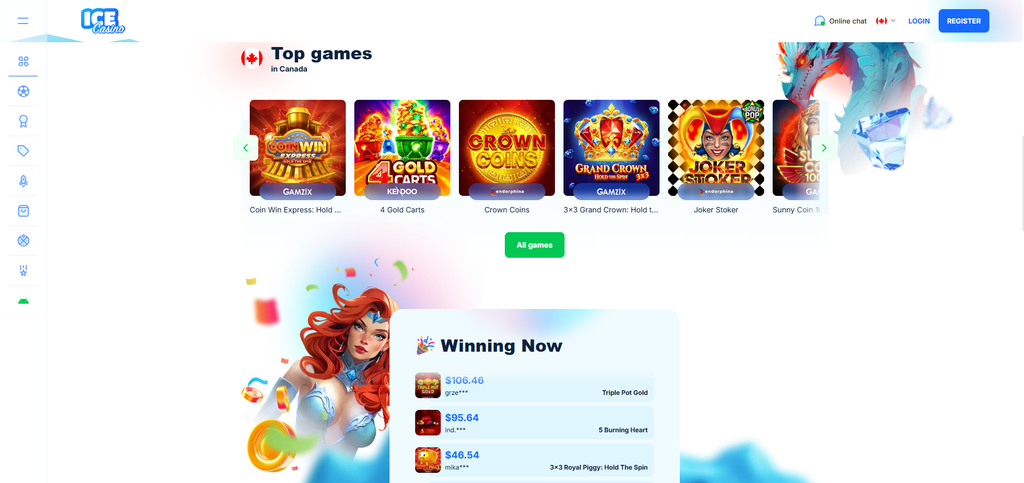
IceCasino: 50 free spins on a Playson slot with x3 wagering
The stated condition here is 3x and Playson is the studio credited for the game behind it. The first of those is the operator’s own drafting, the second identifies the developer of the title, and the two come from entirely separate places within the document. Book of Fallen holds all fifty of the rounds, each one recorded at CAD 0.30, with CAD 38 published as the ceiling on any request. No string whatever is held in the corpus for this particular offer, and no activation route is read into the gap.
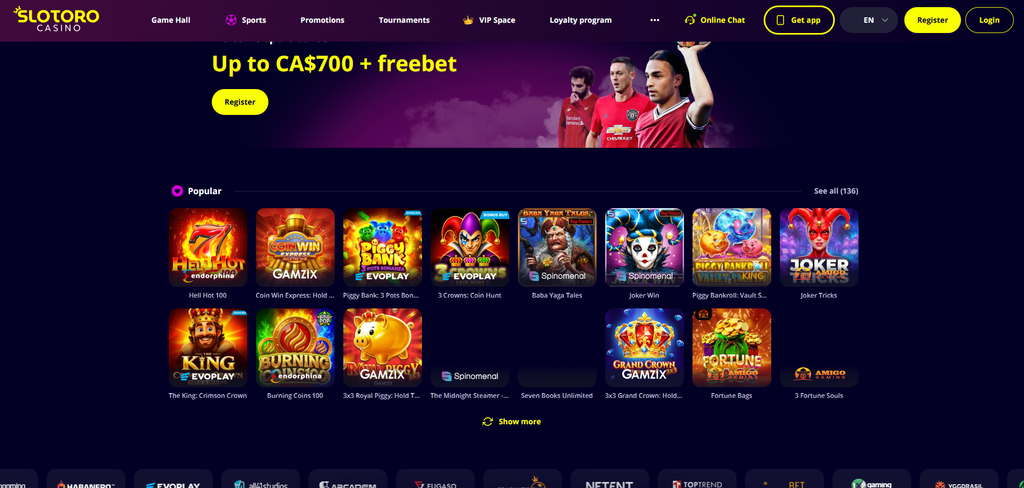
Slotoro: CAD 0.30 free spins on Gates of Olympus
Gates of Olympus is the nominated game and CAD 0.30 is the value given to each of the fifty rounds. The title fixes where the play takes place, the unit value gives what a single play commits, and each is stated in the document without being derived from the other. Pragmatic Play is credited with that game and the stated condition for the offer is 5x. The ceiling is expressed as three times winnings, a unit that is left unresolved here, and no string for the claim is recorded anywhere for the offer.
One observation is worth drawing from the set on its own. The round count and the stated condition are published by all ten documents, the game and the studio by eight each, and a cash ceiling by four. The fields a reader can always locate are therefore the two that describe the scale of the promotion and the volume of play asked for, while the field that would describe how much can actually leave an account is published as a cash amount by fewer than half of them. Nothing beyond that is concluded here, and no document on the page is treated as stronger than another for which of the six headings it happens to fill in.
Which games the free spins apply to and who builds them
Eight of the ten documents name a single game the rounds are tied to. One publishes a list of six eligible titles and leaves the choice inside that list to the player. One records no title at all, which places the game behind those rounds outside the available material rather than leaving them unrestricted across a catalogue.
The titles recorded across the set are Book of Ra Deluxe, Elvis Frog Trueways, Sweet Bonanza, Le King, Lady Wolf Moon Megaways, Big Bass Splash, Book of Fallen and Gates of Olympus. No two of the selected brands are documented against the same title. An assignment settles the place in which the rounds are played and refuses to let them move while they remain promotional. Beyond that it settles nothing, and no further property of the game follows from it.
A studio is credited for the nominated game in eight documents, one records an offer drawing on several studios, and one credits nothing. Pragmatic Play is credited at three of the brands, with Novomatic, BGaming, Hacksaw Gaming, Booming Games and Playson accounting for one each. A studio credit identifies the developer credited for that game. It is a name attached to a title and nothing further.
That boundary matters for a reader working through a shortlist, because a credit can look like more information than it is. No property of a game — how it plays, its volatility, the style of play it suits, its hit frequency, its return to player, its fit with a wagering condition — is inferred here from a title or a studio, and nothing about the quality of a promotion follows from the developer attached to it. The conditions around a game were written by the casino rather than by the developer, and they are read out of the document rather than from the name of the game.
What wagering means on a no deposit bonus
A wagering requirement is the volume of play a document asks for before promotional value converts. It is not announced as one number. Two published elements produce it, and both have to be located in the terms before the figure on the promotional page carries much meaning. The first is an amount. The second is a figure laid over that amount. Read alone, the figure describes how a requirement is built and says nothing about the size it reaches, which is why a page carrying only a multiple has given a reader less than it appears to.
Nine of the ten offers compared above publish their condition as a figure, running from 3x at the low end to 50x at the high end. The tenth publishes a condition in words, reproduced as that operator phrased it and kept clear of the numeric scale, since that document supplies no number for it and an invented figure would report something no operator wrote. That leaves nine of them readable against one another on this field and one readable only on its own, which limits the comparison rather than describing the offer. Neither form stands above the other here.
| Element | What the terms set |
|---|---|
| The base | The amount the document nominates for the calculation, which may be the credited sum, whatever the rounds returned, or a figure defined internally |
| The multiple | The stated figure laid over that base, published on the promotional page in most cases |
| The turnover | The product of the two, which is the volume of play required before value can convert |
Whatever the document names is the base, and it is never reconstructed from the figure. A condition of 30x states the number of times something must be turned over and gives no account of what that something is. A bonus balance of CAD 36 with a stated multiplier of 30 produces CAD 1,080 of required turnover, invented figures serving only to show the mechanism. Alter either input and the total shifts, which is how two offers carrying the same figure end up asking for play of very different volumes. Finding the base is the more valuable half of the task for anyone with a shortlist, because the figure is set in large type beside the offer while the amount behind it waits in the terms.
Which games count toward wagering requirements
Play that turns a requirement over and play that reduces it are not the same quantity, because how much of a stake registers depends on the category of game carrying it. A rate for each category is normally published, and it fixes how much of a stake reaches the total still outstanding. Slot play commonly registers in full. Table products and live ones frequently register only in part, and certain categories can be left out of the sum entirely. No standard covers this across the market, so the table issued with an offer is where its rates live. The distance between a stake and the amount recorded against it is where a requirement grows heavier than its figure suggested:
- CAD 320 staked
- 20 per cent contribution
- CAD 64 recorded toward the requirement
Those figures are invented and belong to no brand. Contribution rates go undocumented for all ten offers above, and for every brand in the wider pool behind the page, which leaves the applicable rate inside each operator’s own document. An excluded category registers nothing against the total no matter what volume moves through the account. Set side by side, a figure and a rate do different jobs: one fixes the size of the total, the other how fast it comes down. A reader holding one without the other holds half the condition.
How much can you bet while a bonus is open?
Many documents limit the size of a single bet for as long as a condition remains unmet. A limit of that kind operates on each wager taken individually rather than on the running total, so it does not reduce the turnover asked for; what it governs is the rate at which that turnover can be accumulated. The two clauses are read separately for that reason, since one of them sets a quantity while the other sets a pace, and a document may carry either without the other.
Not one of the ten offers compared above documents a maximum bet figure, so where such a limit applies it is found in that operator’s own wording. What the terms attach to exceeding it varies: in some documents the wager loses its contribution toward the total, and in others a wider consequence sits in a separate clause, which is why the drafting around the limit matters as much as the limit itself. Where a document publishes a figure of this kind on the promotional page rather than inside the terms, it is still the terms that state the effect of going past it, and the effect is what a reader working through a shortlist actually needs, rather than the figure standing on its own.
What withdrawal cap applies to a no deposit bonus?
Once promotional value has converted, a withdrawal cap fixes the point at which a request stops, and its form varies. Four of the ten documents above give it as a cash amount: CAD 75, CAD 38, CAD 15 and CAD 15. Three put the ceiling in some other unit: two of them as a bonus multiple, one as a multiple of winnings. Three hold nothing under the heading at all, which puts the limit on those three beyond the available material rather than showing that none exists. The three forms are reported as they stand and are not ranked against each other.
No unit is weighed against an amount on this page. A multiple keeps the form its document gave it and is never turned into cash, since nothing in the record supplies the sum behind it, and a cash ceiling is never set beside a multiple as if one measure covered both. Nor does any ceiling get multiplied by a wagering figure: those clauses occupy opposite ends of a promotion, answer questions of different kinds, and were written without reference to each other.
What a ceiling governs is the exit, and nothing further. Take a converted balance of CAD 265 standing against a published ceiling of CAD 90: a request carries the ceiling, and what sits above it is not reserved for a second attempt. Both of the figures there are invented and attach to no brand at all. Whatever play produced the balance is untouched by a ceiling, as is the condition met before it, and as is the time the two of them consumed.
How to withdraw winnings from a no deposit bonus
A payout can be requested once the promotion’s condition has been met and the value has crossed into the account’s payable part. Before then the balance is the promotion’s, whatever figure appears on it, and nothing can be requested against it. The terms place conversion at a single moment rather than spreading it, and an account shows no sign of it in advance.
Two arrangements are distinguished in some documents. In the first, the credited sum crosses over along with the return from the rounds. In the second, the operator reclaims that sum at conversion and the winnings alone go on. Which one governs is printed with the offer rather than settled uniformly across the market, and it alters what meeting a condition is finally worth. Locating the clause before a claim is therefore worthwhile, because whoever meets the condition meets this arrangement in the same breath.
After conversion, three things take over: the ceiling over the request, the payment clauses inside the document, and whatever checks the operator elects to run. Some terms carry a condition calling for a deposit ahead of a first withdrawal. Nothing here calls that common or standard, no brand is named for it, and where it does apply the clause belongs to that document rather than to the promotion. Such a clause is read beside the payout clause rather than instead of it, the two being capable of sitting in separate parts of one document.
No payout route and no timeline is on record for any of the ten offers above, leaving each of those to the operator involved and to whichever method ends up carrying the payment. On an account funded by a promotion alone, the payout clause repays a reading before the claim rather than afterwards, since it governs how converted value arrives and nothing earlier will have given a reader cause to look at it.
Paying in and getting paid at a Canadian casino
Money going into an account is a matter of selection. The catalogue at casinos serving this market falls into a few recognisable families, and the choice belongs to the holder. Interac e-Transfer and Interac debit both run through a bank account and are familiar here. iDebit and Instadebit link a bank to a casino balance in much that manner. Cards operate inside whatever their issuer permits. E-wallets carry a balance of their own partway along. Cryptocurrency runs outside the banking chain where an operator takes it, and prepaid products need no banking relationship. Which family is actually offered differs across a platform conducted and managed by a province, a brand registered in Ontario, a brand registered in Alberta and an offshore site, and no family named here is tied to a named casino on this page.
Money coming back out is governed by restriction instead of choice. What is available for a payout is frequently a shorter list than what is available for funding, the two being drawn up separately by operators. A document may call for a withdrawal to travel back by the method a deposit came in on, plainly a difficulty where an account was never funded, and the individual terms are what settle it. A timeline follows from the operator involved, from the method and from the clauses in the document rather than from any category, so none is asserted and no fee quoted. Identity checks belong on this side of the account as well, and the moment at which any one of them arrives is fixed nowhere in the market, which is why the table below sets out moments rather than a sequence of them.
| Moment | What the terms may require |
|---|---|
| At registration | Confirmation of who the account holder is, measured against the details entered when the account was opened |
| At the point of a claim | Confirmation that the account satisfies the eligibility wording, where the framework the operator works under calls for it |
| At a payout request | Confirmation that the payment route on the account is owned by its holder and by nobody else |
Every moment above is conditional and none is scheduled. A check may come at one of them, at several, or at some point none of the three covers, according to the operator and the framework standing behind it. Verification does not invariably arrive at a first withdrawal, and nothing on this page suggests otherwise. No inventory of particular documents appears here, because whichever ones an operator calls for belong to that operator and lie outside the recorded material. A request waiting on a check follows that operator’s internal process, and the terms do no more than announce that the process exists, saying neither how long it runs nor what brings it to a conclusion.
How long does a no deposit bonus stay valid?
Validity names the window over which an offer, and the conditions riding on it, remain live. Its reach usually extends to the promotional rounds, to any unmet part of the condition and to value still sitting on the promotional side. Terms commonly supply two things: how long the window runs, and the event from which the count begins. Should a window shut while any of that is unfinished, the same clause ordinarily says what becomes of the remainder, and that is the half readers skip most often.
No validity window is on record for the thirty brands behind this page, and the ten above are among them. The gap belongs to the material and says nothing about the offers: no figure could be recorded, which is far from a claim that these promotions never expire or carry no window. No duration at all is put forward here, since an invented one would report what no operator ever published. Anyone claiming one of these offers finds the window in the document belonging to that promotion, where the starting event counts for as much as the length.
What can cancel an offer before it pays out
It is possible for an offer to end having produced nothing, and the reasons sit in the terms rather than applying market-wide. Every cause listed here appears in some operators’ documents and nowhere at all in others, so not one of them is a general rule, and none attaches to a brand named anywhere on this page.
- A bet exceeding a published maximum while the condition remains open, which may remove that bet’s contribution or bring a broader consequence out of a separate clause.
- Play on an excluded title, the result depending on how the exclusion was drafted and on whatever the document attaches there.
- A validity window reaching its end with rounds unplayed, a condition unmet or promotional value undisbursed, in documents providing for that outcome.
- A further promotion live at the same time, which leaves unsettled which of the two offers a given wager should be counted toward.
An unfinished identity check stands a little apart from the four listed above, its usual effect being to hold up a payout rather than to end the promotion standing behind it. Consequences throughout are drafted offer by offer, and a clause may end only the promotion or extend as far as the account surrounding it.
When should you contact casino support?
A question about a promotion comes from one of three sources, and knowing which spares the effort of asking in the wrong place. The three of them are the published terms, the account’s own record, and support itself. Each of the three answers a different kind of question, and the first two of them between them answer a great many of those without anyone being contacted at all.
The published terms answer every question about a rule. The figure, the base it applies to, the nominated game, the ceiling over a request and the eligibility wording are all published, and every one of them reads identically for each account holding that offer. A question of this kind is read rather than asked, because support has nothing to add to a clause it did not draft.
The account’s own record answers questions about position. What was credited, when it was credited, what the promotional balance currently holds and what the record shows against the condition are all of them matters of fact on that one account. Where the operator displays progress, the record is the fastest route to it. Where nothing at all is displayed, the question moves on to the third source.
Support answers what neither of the other two sources can: whether a particular promotion attached, whether a published string is still live on that one account, and what a held request is waiting on. A question of that kind is best put with the date of the claim and the string where one was published, since those are the details that let an operator find the account quickly.
No deposit bonus FAQ for Canadian players
What does a no deposit bonus give you at an online casino?
It gives an account a run of free rounds on a nominated game, or a sum of promotional credit.
The conditions published beside the award differ between documents, and that is where the substance of an offer sits.
Do you have to pay anything to claim one?
No payment is called for by the promotion itself, which is precisely what the category’s name describes.
Some operators’ terms do call for a deposit before an initial withdrawal, so the individual document is what settles that.
How many free spins come with a no deposit bonus?
Among the ten offers compared above, fifty free rounds are awarded by seven of them and a hundred by three.
Documents elsewhere record counts outside that range, and a larger count implies nothing about the condition beside it.
What does the value of a free spin mean?
It means the amount a casino places behind one promotional round, which belongs with stake sizes rather than balances.
Eight of the ten offers above publish that figure and two record none, leaving the stake behind a play unstated.
Where do you enter a no deposit bonus promo code?
Where the terms publish a string, they generally name the place it goes and the point at which it goes there.
Some documents call for it during registration and others inside the promotional pages of an account already open.
What happens if no promo code is listed?
Four of the ten offers above record no string, which is a statement about the record and nothing more.
It establishes neither that a string is unnecessary nor that the award arrives by itself, and the document settles it.
Which game do the free spins have to be used on?
Every one of the ten offers either names a game, publishes a list of eligible titles, or records nothing there.
Where a game is named the rounds stay on it while they remain promotional, and the terms permit nowhere else.
What amount do wagering requirements apply to?
They apply to whichever amount the operator’s own document nominates as the base for that particular calculation.
Some name the credited sum, others whatever the rounds returned, and others a figure defined internally and explained nowhere.
Do all casino games count toward wagering?
Rates are published per category of game, so a stake may register in full, register partly, or not register.
Contribution rates go undocumented across all ten offers above, which leaves each of them inside that operator’s document.
How much of a win can you actually withdraw?
A ceiling published with the offer sets how far a request reaches, and four of the ten give it in cash.
Three put that ceiling in another unit and three record nothing, leaving the limit on those three unstated.
How long does a no deposit bonus last?
None of the ten offers above has a validity window on record, which is a gap in the available material.
Terms normally give both the length of a window and the event that starts it, and that document carries both.
Can players in Ontario claim a no deposit bonus?
Promotions sit inside the Ontario framework, which governs how they may be advertised rather than removing them from the province.
An offer may consequently be visible to someone who has signed in while appearing on no page open to all.
Will the casino ask you to verify your identity?
A check is common enough, although the moment it arrives is not fixed and depends on the operator concerned.
It may fall at registration, at the point of a claim, at a payout request, or at some later trigger.
Setting gambling limits and finding help in Canada
A regulated account comes as a matter of course with controls its holder sets in person, and no promotion needs to be running for any of them to work. A deposit limit caps whatever the account will take over a period of the holder’s choosing. Time limits and session reminders follow a run of play and break into it at a threshold set beforehand. A play history preserves what happened rather than entrusting it to recollection, which gives a sounder reference than memory does. Self-exclusion runs considerably longer than any of those and is administered separately in each province, so the reach of a scheme and the brands captured by it are not the same from one province to another. Help is arranged on the same footing, and Canada runs no single national helpline.
Responsible Gambling Council directory — a national pointer toward the services set up in each province, and the sensible first stop when the relevant province is not obvious from a list of numbers.
ConnexOntario — 1-866-531-2600, which is the service for Ontario and is reached on that number direct.
Gambling Support BC — 1-888-795-6111, which covers British Columbia and is reached on that number from inside the province.
Saskatchewan Problem Gambling Help Line — 1-800-306-6789, the service covering Saskatchewan and reached on that number from within it.
Calls to each of the lines above are free and confidential, and none of them requires an account, a balance or a promotion in progress.